
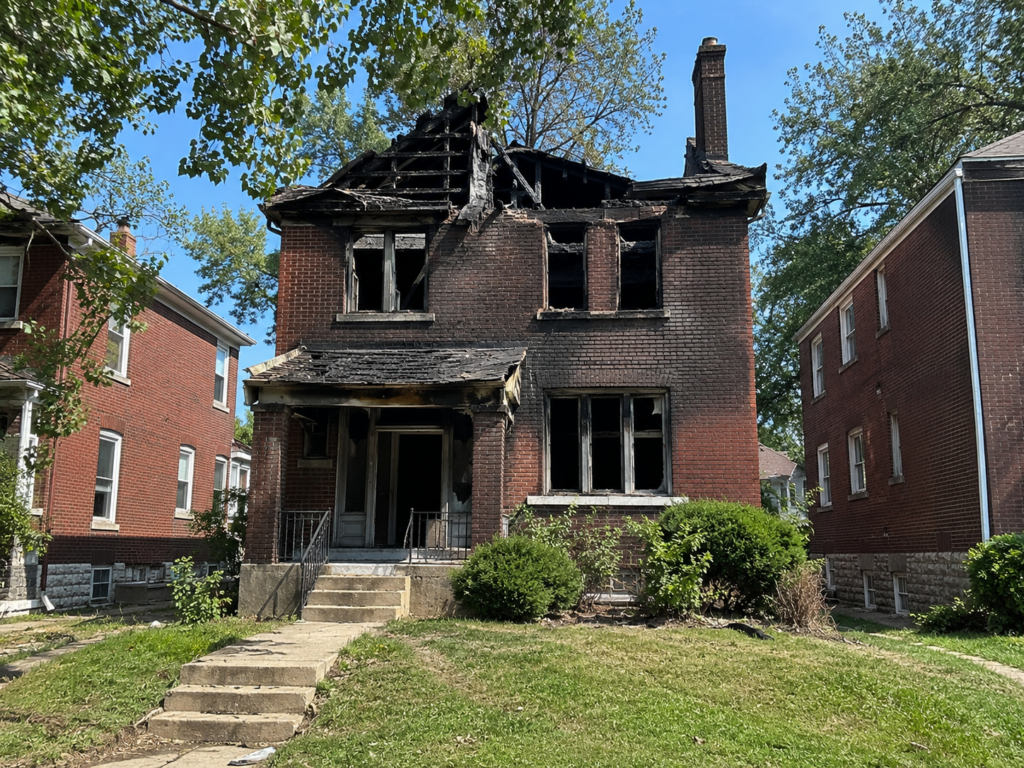
A house fire changes everything fast. One day you’re dealing with normal homeownership issues. The next, you’re talking to insurance adjusters, contractors, and trying to figure out whether your home is even salvageable.
If you need to sell a fire-damaged house in St. Louis, you do not have to repair it first.
Many homeowners assume they must rebuild the property, replace smoke-damaged materials, or pass inspections before selling. That’s not always true. In Missouri, you can legally sell a fire-damaged property as-is, even if the home has structural damage, smoke contamination, or partial destruction.
The key is understanding your options.
This guide explains how to sell a fire-damaged house in St. Louis without spending thousands on repairs. We’ll cover insurance complications, buyer concerns, pricing expectations, and how cash home buyers evaluate damaged properties.
If you’re overwhelmed after a fire, this article will help you make a practical next move.
Can You Sell a Fire-Damaged House As-Is in St. Louis?
Yes. You can sell a fire-damaged house in St. Louis as-is without making repairs.
Most traditional buyers will avoid heavily damaged homes because lenders often refuse financing on unsafe or uninhabitable properties. That leaves many homeowners stuck between expensive renovations and mounting costs.
Cash buyers and real estate investors work differently.
Instead of expecting a move-in-ready house, they evaluate:
- Structural condition
- Fire and smoke damage
- Repair costs
- Land value
- Neighborhood demand
- Potential resale value
In many cases, sellers can close within 7–21 days without repairing drywall, replacing electrical systems, or removing smoke odor.
This route is common for:
- Severe fire damage
- Insurance claim disputes
- Inherited damaged properties
- Vacant homes
- Financial hardship situations
- Landlord properties with tenant-related fires
Selling as-is won’t get full retail market value. That’s the tradeoff.
But for many homeowners, avoiding $40,000–$150,000 in repairs is worth more than waiting months for a traditional sale.
Why Fire-Damaged Homes Are Hard to Sell Traditionally
Most Buyers Want Move-In Ready Homes
The average buyer scrolling listings in St. Louis is not looking for a reconstruction project.
Even minor fire damage creates concerns about:
- Electrical safety
- Hidden structural problems
- Smoke contamination
- Mold from firefighting water
- Insurance availability
Once buyers hear “fire damage,” many assume the worst.
Some of that fear is justified.
Smoke can travel through insulation, HVAC systems, and wall cavities. Even when visible damage looks limited, the restoration bill may be much larger than expected.
We’ve seen situations where kitchens looked repairable, but the smoke odor had spread through the entire house ventilation system. That alone pushed restoration estimates past $30,000.
Financing Becomes a Problem
This is one of the biggest issues sellers run into.
Many lenders will not approve mortgages for homes with:
- Unsafe wiring
- Roof instability
- Major structural damage
- Missing drywall
- Fire-related habitability concerns
That means even interested buyers may not qualify for financing.
Cash buyers remove that hurdle because they purchase properties without bank approval requirements.
Insurance Claims Can Delay Everything
Insurance payouts don’t always happen quickly.
Some homeowners in St. Louis wait months while adjusters inspect damage, dispute estimates, or process claims. During that time:
- Property taxes continue
- Mortgage payments continue
- Utility bills continue
- Vacant homes deteriorate further
Selling as-is can sometimes help homeowners move forward before insurance disputes fully resolve.
Your Options for Selling a Fire-Damaged House in St. Louis
Not every fire-damaged property requires the same strategy.
The right path depends on:
- Severity of damage
- Financial situation
- Insurance payout
- Timeline
- Property location
Here are the main options.
Option 1: Repair and List Traditionally
This works best when:
- Damage is minor
- Insurance covers most repairs
- You have time and cash reserves
You’ll typically need:
- Licensed contractors
- Permit approvals
- Smoke remediation
- Electrical inspections
- Cosmetic restoration
The upside is potentially higher resale value.
The downside?
Repairs often cost more than expected.
In older St. Louis homes especially, fires can expose outdated wiring, plumbing issues, or hidden code violations that increase renovation costs dramatically.
Option 2: Sell the House As-Is
This is the fastest route for many distressed homeowners.
You skip:
- Repairs
- Cleaning
- Renovation loans
- Contractor management
- Inspection negotiations
Instead, the buyer purchases the property in its current condition.
This option is common when homeowners:
- Need to relocate quickly
- Don’t have repair funds
- Want to avoid foreclosure
- Inherited a damaged property
- Are emotionally exhausted after the fire
Option 3: Sell to a Cash Home Buyer
Cash buyers specialize in distressed properties.
They typically purchase:
- Fire-damaged houses
- Vacant homes
- Hoarder houses
- Water-damaged properties
- Probate homes
The process is simpler than a traditional listing.
Usually:
- You request an offer
- The property is evaluated
- You receive a cash offer
- Closing happens through a title company
No repairs required.
How Cash Buyers Evaluate Fire-Damaged Properties
This is where many sellers misunderstand the process.
Cash buyers are not simply “lowballing” randomly. They’re calculating risk and renovation costs.
Here’s what they usually evaluate.
Structural Damage
This includes:
- Foundation stability
- Roof integrity
- Load-bearing walls
- Floor damage
- Framing condition
Structural repairs are among the most expensive parts of fire restoration.
Smoke and Soot Contamination
Smoke damage can be harder to fix than visible burn damage.
Heavy smoke penetration may require:
- Drywall replacement
- HVAC replacement
- Insulation removal
- Deep odor remediation
Lingering smoke odor kills resale value quickly.
Water Damage From Firefighting
A lot of homeowners forget this part.
Fire hoses can create:
- Mold growth
- Ceiling collapse
- Flooring damage
- Rotting wood
- Electrical hazards
Sometimes the water damage becomes more expensive than the fire damage itself.
Neighborhood and Lot Value
Location still matters.
A damaged property in a strong St. Louis neighborhood may attract aggressive investor interest because of redevelopment potential.
Areas with rising home values often see investors willing to take on larger renovation projects.
What You Should Expect During the Selling Process
Step 1: Gather Basic Information
You don’t need a perfect inspection report.
But it helps to gather:
- Insurance claim details
- Fire department reports
- Photos of damage
- Mortgage balance
- Repair estimates if available
Transparency matters.
Trying to hide fire history almost always creates problems later during title or inspection reviews.
Step 2: Request Offers
If you’re selling as-is, it’s smart to compare multiple offers.
Some investors dramatically underprice properties hoping distressed sellers accept immediately.
A legitimate buyer should explain:
- How they calculated the offer
- Estimated repair costs
- Closing timeline
- Fees involved
Step 3: Review the Contract Carefully
Watch for:
- Long inspection periods
- Hidden fees
- Assignment clauses
- Financing contingencies
Strong cash offers are usually:
- Straightforward
- Fast-closing
- Contingency-light
Step 4: Close Through a Title Company
In Missouri, reputable buyers close through licensed title companies.
That protects both parties and ensures:
- Liens are cleared
- Ownership transfers properly
- Funds are distributed legally
Common Mistakes Homeowners Make After a House Fire
Waiting Too Long to Decide
Vacant fire-damaged homes deteriorate quickly.
St. Louis weather can accelerate:
- Mold growth
- Roof leaks
- Pest infestations
- Structural weakening
The longer the property sits exposed, the lower the value often becomes.
Spending Money on Partial Repairs
This happens constantly.
Homeowners spend $15,000 fixing cosmetic issues but still can’t qualify for traditional financing because deeper structural problems remain.
Partial renovations rarely produce full ROI on heavily damaged properties.
Assuming Every Investor Is Legitimate
Some are excellent.
Some are not.
Avoid buyers who:
- Pressure you aggressively
- Avoid title companies
- Refuse proof of funds
- Change pricing last minute
A credible buyer should communicate clearly and document everything.
Ignoring Tax or Insurance Implications
Insurance payouts and property sales can create tax questions depending on:
- Capital gains
- Insurance settlements
- Mortgage forgiveness
- Inherited ownership
It’s smart to speak with a CPA or real estate attorney if the numbers are significant.
Why Many St. Louis Homeowners Choose As-Is Sales
After a fire, most people are not thinking about maximizing resale value.
They’re thinking:
- “How do I stop the financial bleeding?”
- “How fast can I move on?”
- “How much more money will this cost me?”
That emotional side matters more than most real estate articles admit.
Managing contractors for six months while fighting insurance adjusters is exhausting. Some homeowners simply want closure.
An as-is sale provides that.
Especially for:
- Older homeowners
- Out-of-state heirs
- Landlords
- Families relocating after major damage
You may not get retail pricing.
But you avoid repair debt, uncertainty, and months of delays.
For many people, that tradeoff makes sense.
Frequently Asked Questions
Can I legally sell a fire-damaged house in St. Louis?
Yes. Missouri allows homeowners to sell fire-damaged properties as-is as long as known damage is disclosed properly during the transaction.
Do I have to repair smoke damage before selling?
No. You can sell a home with smoke damage, soot contamination, or odor issues without completing remediation.
Will insurance still pay if I sell the house?
Possibly. Insurance claims depend on your policy and claim status. Some payouts continue after sale, while others may not. Speak with your adjuster before closing.
How much is a fire-damaged house worth?
It depends on:
- Severity of damage
- Neighborhood
- Repair costs
- Local market conditions
- Lot value
Many investors calculate offers based on estimated after-repair value minus renovation expenses.
Can I sell a burned house with a mortgage still attached?
Yes. The mortgage balance is usually paid from closing proceeds through the title company.
How fast can I sell a fire-damaged house?
Cash sales can often close within 7–21 days depending on title status and documentation.
Should I clean the property before selling?
Not necessarily. Many as-is buyers purchase properties exactly as they sit, including debris or damaged materials.
Are cash home buyers legitimate?
Some are. Some are not. Always verify proof of funds, read contracts carefully, and close through a licensed title company.
Final Thoughts
Selling a fire-damaged house in St. Louis is stressful enough without adding massive repair bills and endless delays.
You do have options.
If rebuilding the property makes financial sense, that may be worth considering. But many homeowners discover the repair costs, insurance delays, and buyer financing problems simply are not worth the headache.
Selling as-is can provide a clean exit without spending months managing contractors or draining savings.
The important thing is understanding the numbers honestly before making a decision.
A good buyer should explain the process clearly, answer questions directly, and give you enough information to decide what works best for your situation.
If you need to sell a fire-damaged house in St. Louis without making repairs, reach out to Simple Solution Home Buyers to discuss your options and request a no-obligation cash offer.